.jpg?w=2249&h=3000)
-1.jpg?w=1728&h=2304)
-RGB.jpg?w=1576&h=531)
Sterling Silver Vs. Pure Silver Vs. Silver-Plated Jewelry: What Are The Differences?
Jul 14,2026 | ChicSilver
When shopping for silver jewelry, you've probably come across terms like Sterling silver, 925 silver, and silver plating. While they may look similar at first glance, these materials differ significantly in composition, durability, maintenance, and long-term value.
Understanding these differences helps you make a smarter purchase—whether you're looking for an everyday necklace, a timeless ring, or a meaningful gift.
In this guide, we'll compare fine silver, sterling silver, and silver-plated jewelry to help you decide which material best fits your lifestyle and budget.
What Is Fine Silver?
Fine silver, also known as pure silver, contains 99.9% silver. It has a bright white appearance and excellent resistance to corrosion.
However, because pure silver is very soft, it scratches and bends easily. For this reason, it's rarely used in everyday jewelry.
Fine silver is more commonly found in collectible pieces, bullion, and handcrafted artisan jewelry than in daily accessories.
Although beautiful, it isn't the most practical choice for rings or bracelets that experience regular wear.
What Is Sterling Silver (925 Silver)?
Sterling silver is made from 92.5% pure silver and 7.5% alloy metals, usually copper. This combination increases durability while maintaining silver's natural beauty.
That's why 925 silver is considered the international standard for quality silver jewelry.
If you're looking for high-quality sterling silver jewelry, this is the material most jewelry experts recommend.
Unlike pure silver, sterling silver is strong enough for daily wear while remaining elegant and valuable.
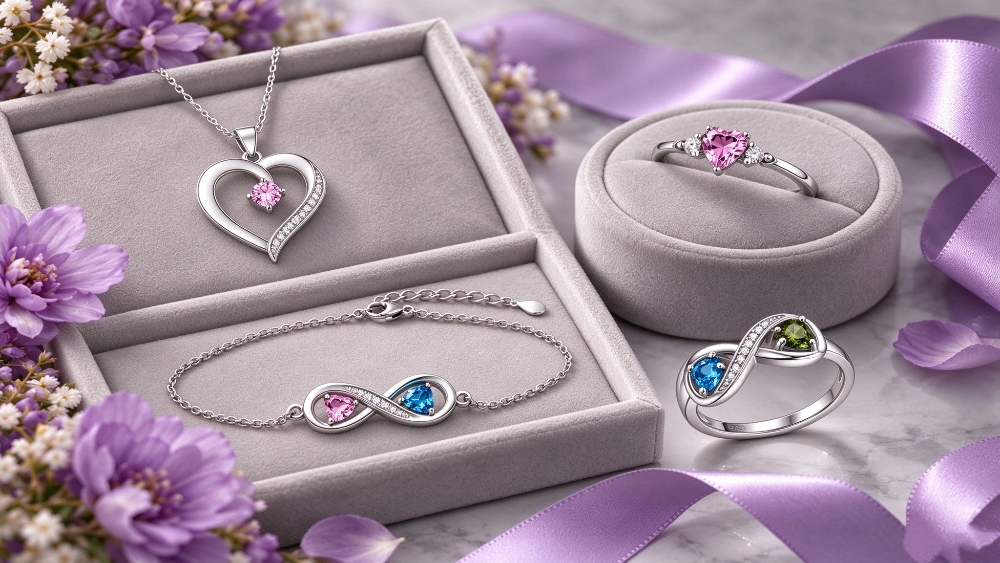
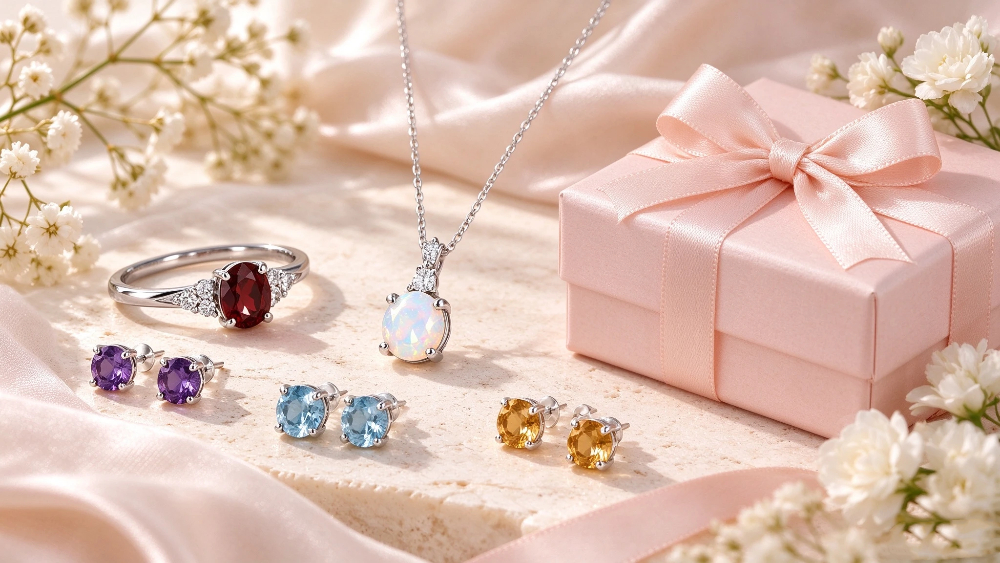
Explore our beautiful Sterling silver Jewellery collection, featuring timeless pieces designed for everyday elegance.
What Is Silver-Plated Jewelry?
Unlike sterling silver, silver plating is not solid silver.
Silver-plated jewelry is made from a base metal—such as brass, copper, or stainless steel—that is coated with a thin layer of silver.
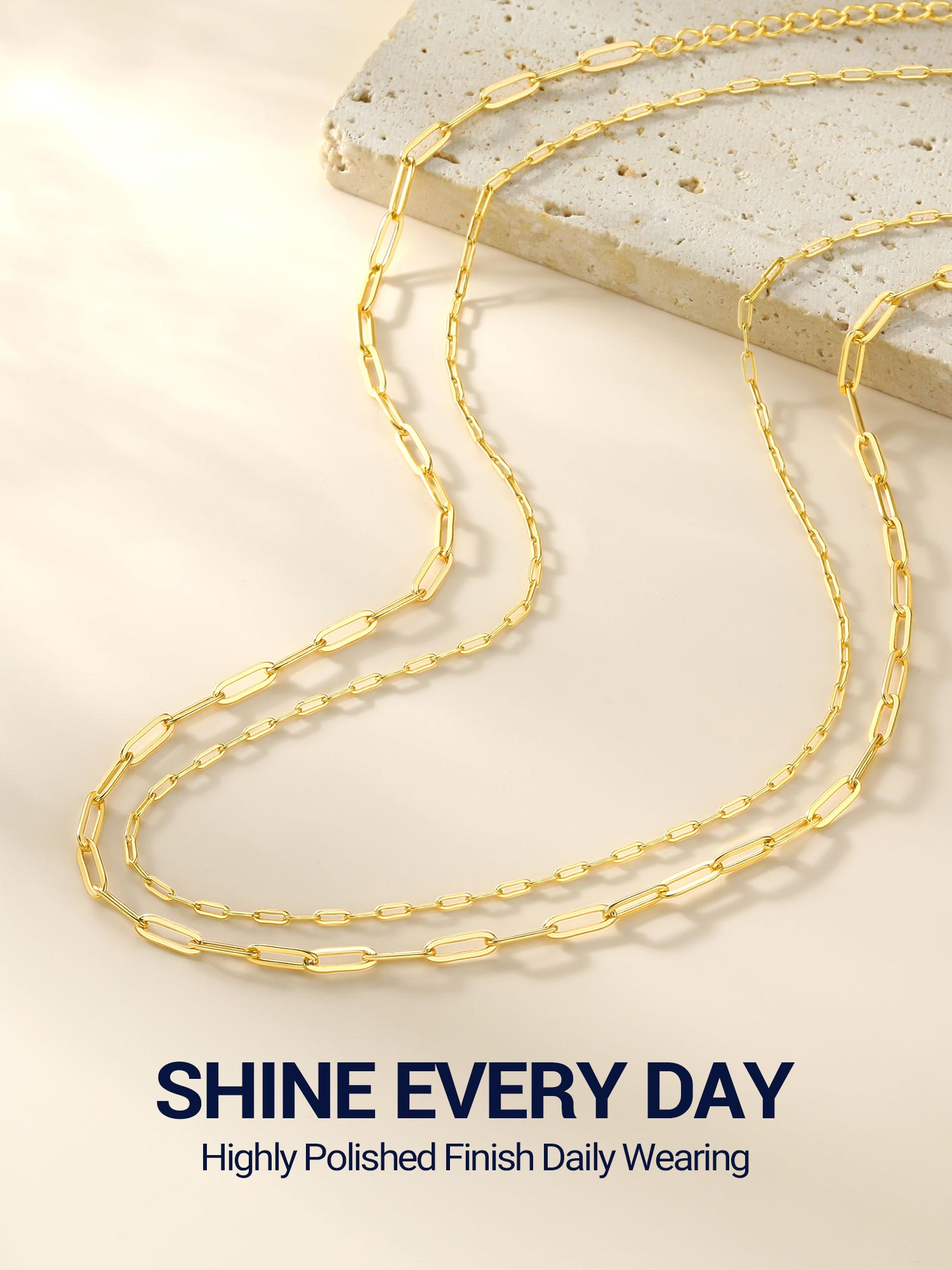
Because only the outer surface contains silver, the finish gradually wears away through friction, sweat, cosmetics, and everyday use.
Although silver-plated jewelry is often more affordable, it generally has a shorter lifespan than sterling silver.
For fashion jewelry worn occasionally, silver plating can be an excellent choice. However, for pieces you'll wear every day, sterling silver is usually the better investment.
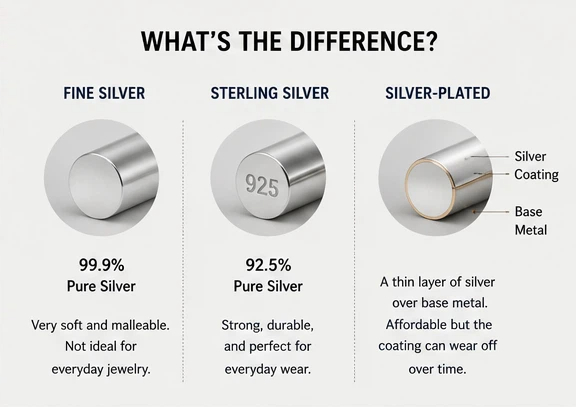
Sterling Silver vs Fine Silver vs Silver-Plated Jewelry
| Feature | Fine Silver | Sterling Silver (925) | Silver-Plated Jewelry |
|---|---|---|---|
| Silver Content | 99.9% | 92.5% | Thin silver coating |
| Durability | Low | High | Moderate |
| Everyday Wear | Not Ideal | Excellent | Occasional |
| Tarnish Resistance | Good | Moderate | Depends on plating |
| Price | High | Mid-High | Affordable |
| Long-Term Value | High | High | Lower |
For most shoppers, Sterling silver offers the best balance between beauty, durability, and value.
Does Sterling Silver Tarnish?
Yes—but that's completely normal.
Sterling silver naturally reacts with sulfur compounds in the air, causing a thin layer of tarnish to develop over time.
Fortunately, tarnish is only a surface reaction and can usually be removed with a polishing cloth or gentle silver cleaner.
Proper storage and regular cleaning help keep sterling silver rings and necklaces looking brilliant for years.
Browse our bestselling sterling silver rings for everyday styles designed to last.
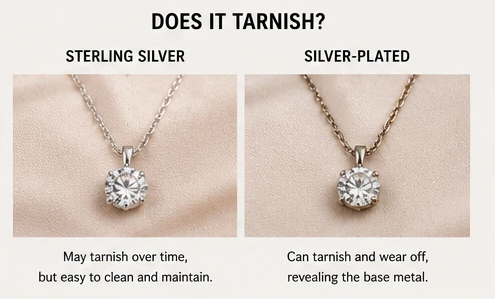
Does Silver-Plated Jewelry Tarnish?
One of the most common questions buyers ask is whether silver plating tarnishes.
The answer is yes.
Not only can the silver layer tarnish, but repeated wear may eventually expose the underlying base metal.
To extend the life of silver-plated jewelry:
-
Remove it before showering or swimming.
-
Avoid perfume and lotions.
-
Store it in a dry, airtight pouch.
-
Clean gently with a soft cloth.
If you wear jewelry every day, sterling silver will usually require less replacement over time.
Which Material Is Best for Everyday Jewelry?
For daily wear, Sterling silver is widely regarded as the best option.
It offers:
-
Long-lasting durability
-
Genuine silver value
-
Easy maintenance
-
Timeless appearance
-
Better resale value than plated jewelry
Whether you're choosing necklaces, bracelets, earrings, or rings, sterling silver strikes the ideal balance between luxury and practicality.
If you're building a versatile jewelry wardrobe, a pair of sterling silver necklaces or classic rings makes an excellent starting point.
Discover our elegant sterling silver necklaces for everyday styling inspiration.
How to Tell If Jewelry Is Real Sterling Silver
Most authentic sterling silver pieces are stamped with one of the following marks:
-
925
-
S925
-
Sterling
-
Sterling Silver
These hallmarks indicate the jewelry meets the 92.5% silver standard.
For additional information about silver standards and precious metals, visit the Silver Institute.
You can also learn more about jewelry care in our guide:How to Clean Sterling Silver Jewelry
Final Thoughts
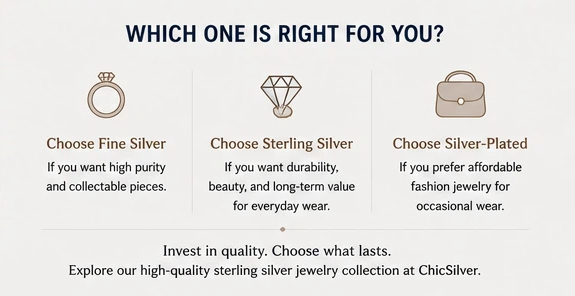
Choosing between pure silver, sterling silver, and silver-plated jewelry depends on how you plan to wear your jewelry.
If you're looking for affordable fashion pieces, silver-plated jewelry can be a good short-term option.
If you want jewelry that lasts for years, offers genuine silver value, and withstands daily wear, Sterling silver is the clear winner.
Investing in high-quality sterling silver jewelry means you'll enjoy timeless style, lasting durability, and pieces you'll reach for every day.
FAQ
1. Is 925 silver the same as sterling silver?
Yes. Sterling silver contains 92.5% pure silver, which is why it's often called 925 silver.
2. Does sterling silver tarnish?
Yes, but tarnish is natural and can be easily cleaned.
3. Is silver-plated jewelry real silver?
It contains a thin layer of real silver over a base metal rather than being solid silver.
4. Which is better for everyday wear?
Sterling silver is the best choice because it's durable, valuable, and easy to maintain.
5. How can I tell if jewelry is genuine sterling silver?
Look for hallmarks such as "925," "S925," or "Sterling."
Comment